
CONNECT: Feb 27 Issue
Today's issue is brought to you by Janvi Bharucha, who discusses the implications of Trump's looming cuts to NIH funding.

Navigating NIH Cuts: The Shift Toward Private Research
Janvi Bharucha (‘26)
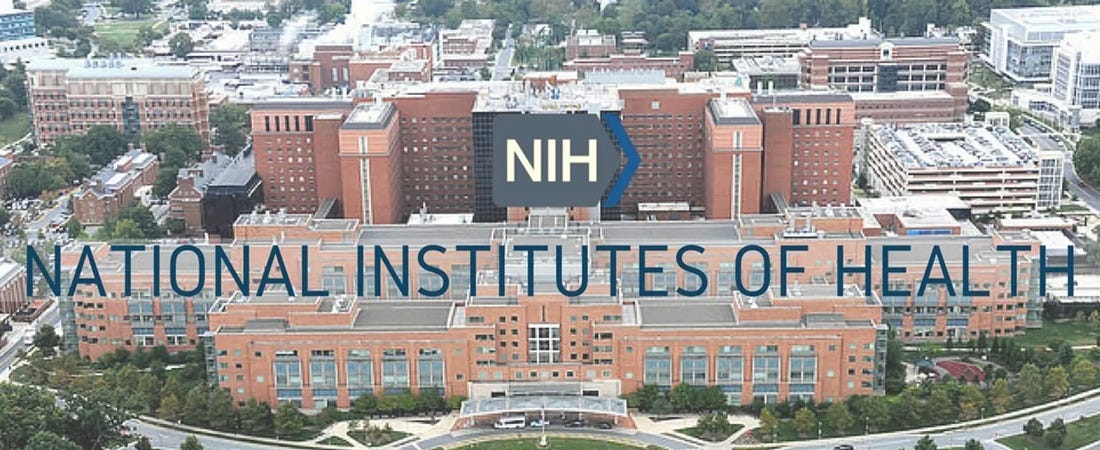
In the past few weeks, President Trump’s administration policy has threatened to cut funding for medical research universities, hospitals, and medical schools4. This policy would essentially limit the NIH’s funding for “indirect costs” grants by 15%3. Although temporarily blocked by a federal judge in Boston, these policies continue to cast looming uncertainty across the academic research community.
At UCLA the impacts are clear. Just yesterday, a friend explained that her final round interview for an NIH-funded research position was canceled due to uncertainty of funding. Another friend shifted to pursuing a premedical path, questioning if a PhD is even possible given the current political state. In the class SOC GEN 105a, Professor Soraya de Chadarevian has expanded the curriculum to help students enrolled better understand the broader impacts of Trump’s policies on scientific innovation and public perception.
These potential NIH budget cuts may lead to academic institutions struggling to maintain smooth research operations3. However, this leaves more room for privately funded research to gain headway. Historically, private funding has a faster timeline, since there is no need for the lengthy grant application and approval process. Further, private funding research likely will lead to a prioritization of high-impact areas that have a clear path to commercialization.
While private research still requires regulatory approval, larger pharmaceutical companies fund and support industry-sponsored journals or partner with existing high-impact journals. This has many benefits for streamlining the research process, but also leaves a larger margin for error. Public mistrust of scientific advancement remains fragile amidst recovery from the COVID-19 pandemic, where companies like AstraZeneca announced global-scale recalls of their vaccines2. Therefore, having a strong reliance on privately funded research from large pharmaceutical companies may further erode this trust.
As researchers eagerly wait in limbo, healthcare and biotech-focused venture capital firms may need to lend a helping hand in sustaining innovation by providing the necessary capital to early-stage companies and research initiatives. Even though policies are still not fully in effect, this shift is already apparent with Altitude Lab, a biotech accelerator, which has established a pre-seed venture fund aimed at supporting startups with promising science that have been affected by the NIH funding cuts1.
The potential reduction in NIH funding represents a significant inflection point for medical research in the United States. It would pose immediate challenges for academic institutions and researchers, while accelerating research toward private funding models. This transition offers both opportunities for streamlined innovation and risks to public trust in scientific advancement.
Sources
Flinn, R. (2025, February 24). Recursion offers lifeline to startups left in limbo by NIH cuts. WeWillCure.com. https://wewillcure.com/insights/investment/recursion-offers-lifeline-to-startups-left-in-limbo-by-nih-cuts
Gallagher, J. (2024, May 9). AstraZeneca to withdraw Covid vaccine. BBC News. https://www.bbc.com/news/health-68977026
NBC News. (2025, February 26). Trump's NIH budget cuts threaten research, stirring panic. NBC News. https://www.nbcnews.com/science/science-news/trumps-nih-budget-cuts-threaten-research-stirring-panic-rcna191744
National Public Radio. (2025, February 8). NIH announces new funding policy that rattles medical researchers. NPR. https://www.npr.org/sections/shots-health-news/2025/02/08/g-s1-47383/nih-announces-new-funding-policy-that-rattles-medical-researchers
National Public Radio. (2025, February 24). Trump administration makes deep cuts to science funding. NPR. https://www.npr.org/2025/02/24/nx-s1-5307157/trump-nih-funding-cut-medical-research
Super interesting and relevant article! Great work!